Battery-production MES · Diagnostic
TURN UNCERTAINTY INTO AN EXECUTABLE PATH TO RAMP-UP.
How a Critical Path Diagnostic transformed a fragmented battery-production MES project from a multi-year concept into a credible two-month delivery plan.
The challenge
The project began without clearly defined customer requirements, committed expert capacity, or an executable schedule. The underlying purpose of the customer’s request was also unclear.
Initial concept
The team proposed modeling more than 30 production processes using swim lanes, but had not agreed on the level of detail, which departments should be involved, or why this approach was necessary.
The initial concept called for more than 120 half-day workshops with many attendees from different departments. This approach risked taking several years and substantial effort to produce an outcome that had not yet been defined.
CPM clarifies the purpose
CPM led discussions, workshops, and meetings to establish the required level of detail, identify all 38 production processes and their variants, and confirm the 14 departments and groups to include in the swim lanes.
More importantly, CPM clarified the purpose behind the request. The customer was a collection of digitally focused teams that needed to identify their own tasks to help prepare the other departments for the start of battery cell production ramp-up.
CPM-led concept
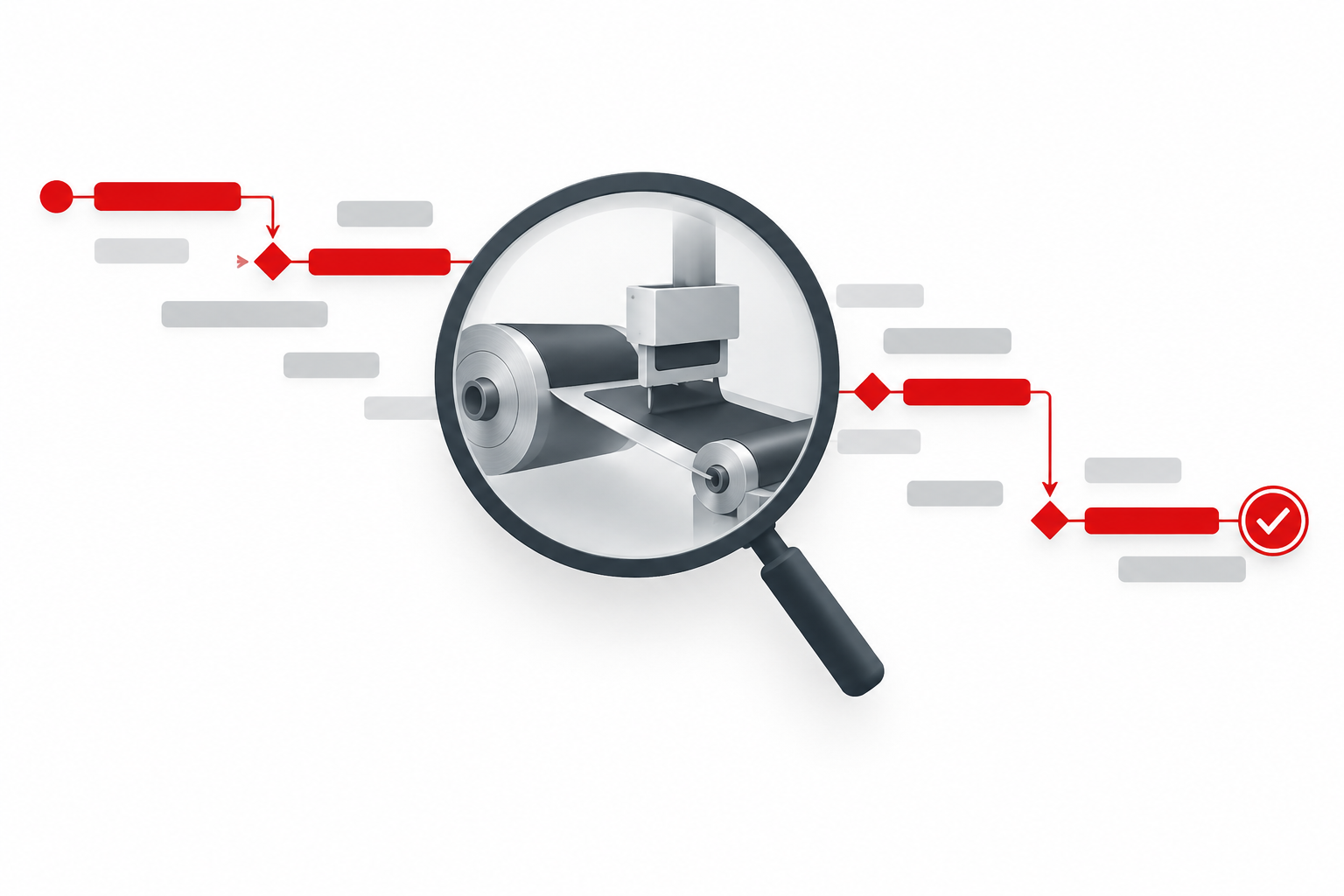
With the true purpose established, CPM built a new integrated master schedule around focused one-on-one equipment walkthroughs between equipment owners and digital team members. Walking through how each piece of equipment operates, or is intended to operate, gave the digital specialists the information they needed to define their work before ramp-up.
This replaced the workshop-heavy approach with direct, practical exchanges that produced actionable task lists for the people responsible.
Outcome:
An executable schedule built around the true purpose
The diagnostic replaced a potentially multi-year concept with a two-month integrated master schedule agreed by all necessary parties. Task owners committed to realistic durations, supported by the project manager’s coordination. Focused equipment walkthroughs reduced the effort required and made the true critical path clear. The plan showed how each digital team member would obtain the task list needed to prepare for production ramp-up.
A shared vision, translated into practical work
The work was detailed, ownership was clear, and the team was aligned around what needed to be done and why. The 38 processes and their variants became the basis for focused conversations and concrete tasks. With a shared purpose and an agreed execution plan, team members could direct their effort toward preparing for ramp-up efficiently and effectively, with a clear understanding of how their work contributed to the wider goal.